Personal Site · 2026
This Portfolio
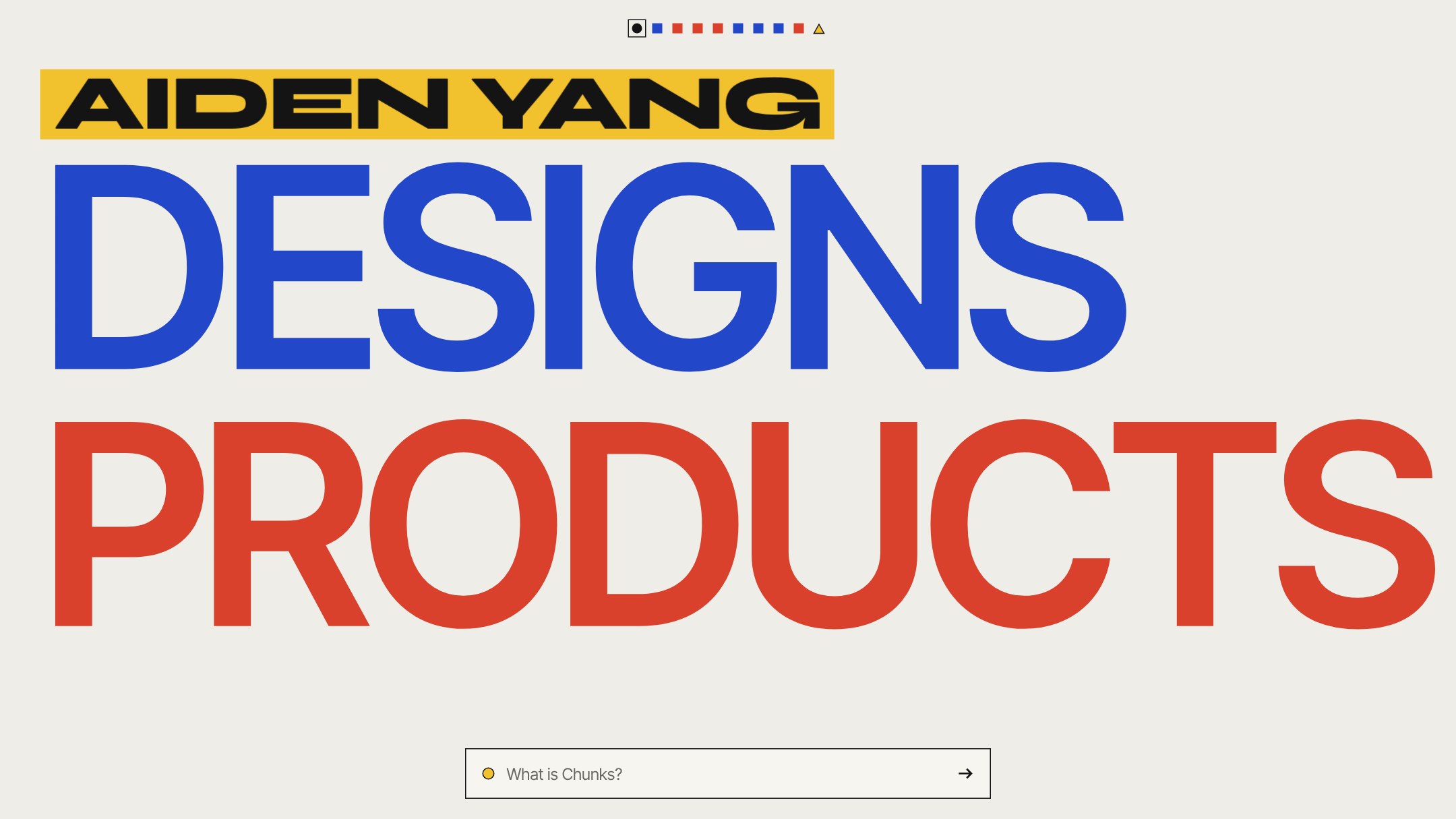
A portfolio you scrub like a video timeline.
Idea
The homepage is a video timeline.
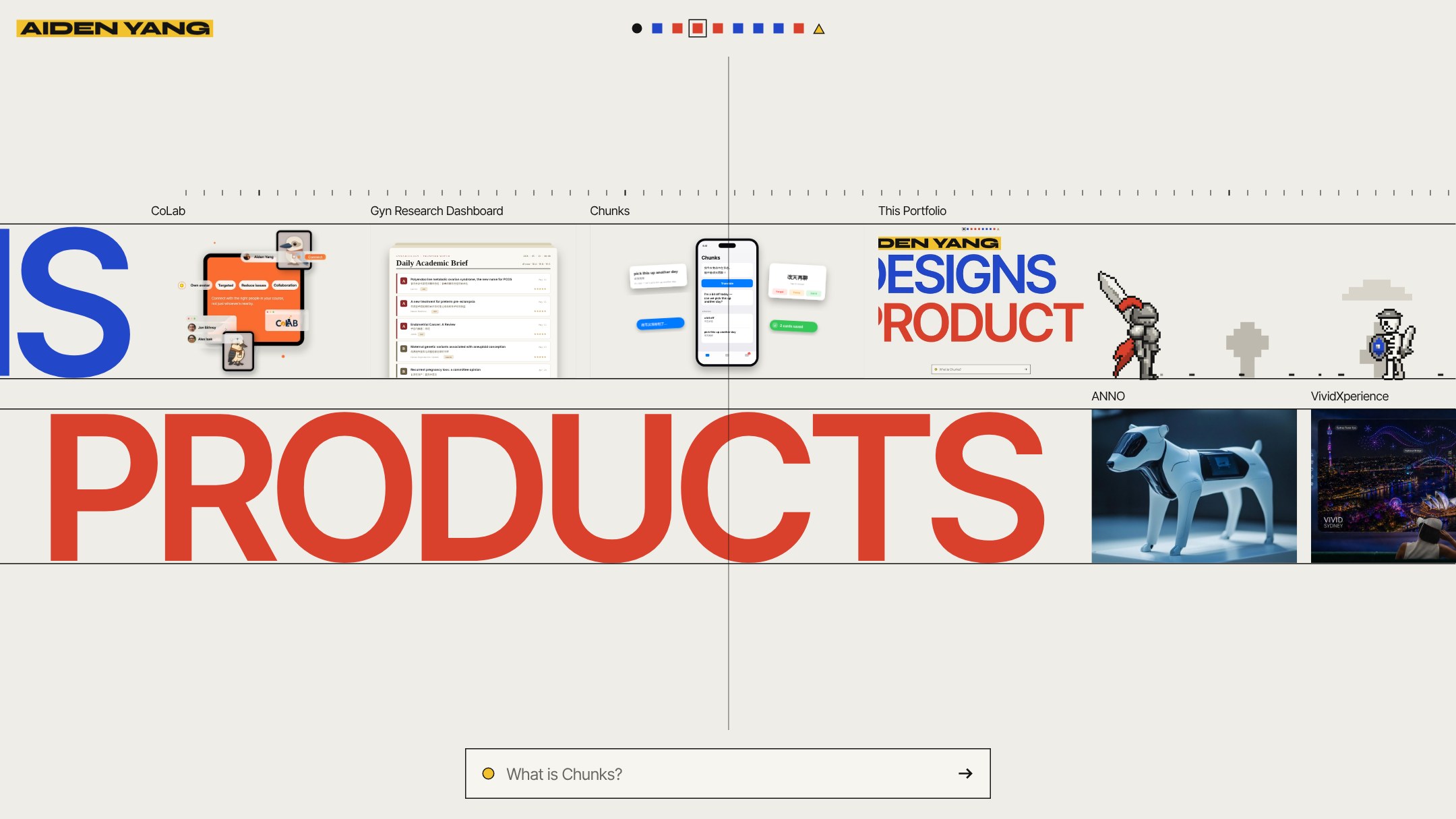
I laid my work out the way a video editor sees a project: two tracks on one ruler. The four projects I would show first sit on the upper track, the rest on the lower one. Scrolling does not move a page. It moves a playhead.
Everything on screen is calculated from where that playhead is. There are no scroll-triggered animations waiting to fire, so the page plays the same forwards and backwards, at any speed.
How
One number drives the whole page.
Zoom
The first 560 pixels of scroll pull the camera back to 72%, so the two giant words shrink to the height of the tracks. The last 560 push it in again for the ending.
Accordion
The clip under the playhead grows by up to 98 pixels and slides every later clip along. Its width is a function of distance to the playhead, so it opens and closes as you pass.
Pinned words
DESIGN and PRODUCTS stay at the left edge until the first clip of their track arrives and pushes them off screen.
Parallax
Two background layers move at 0.7 and 0.4 of the scroll, which is enough to give a flat page some depth.
The Knight
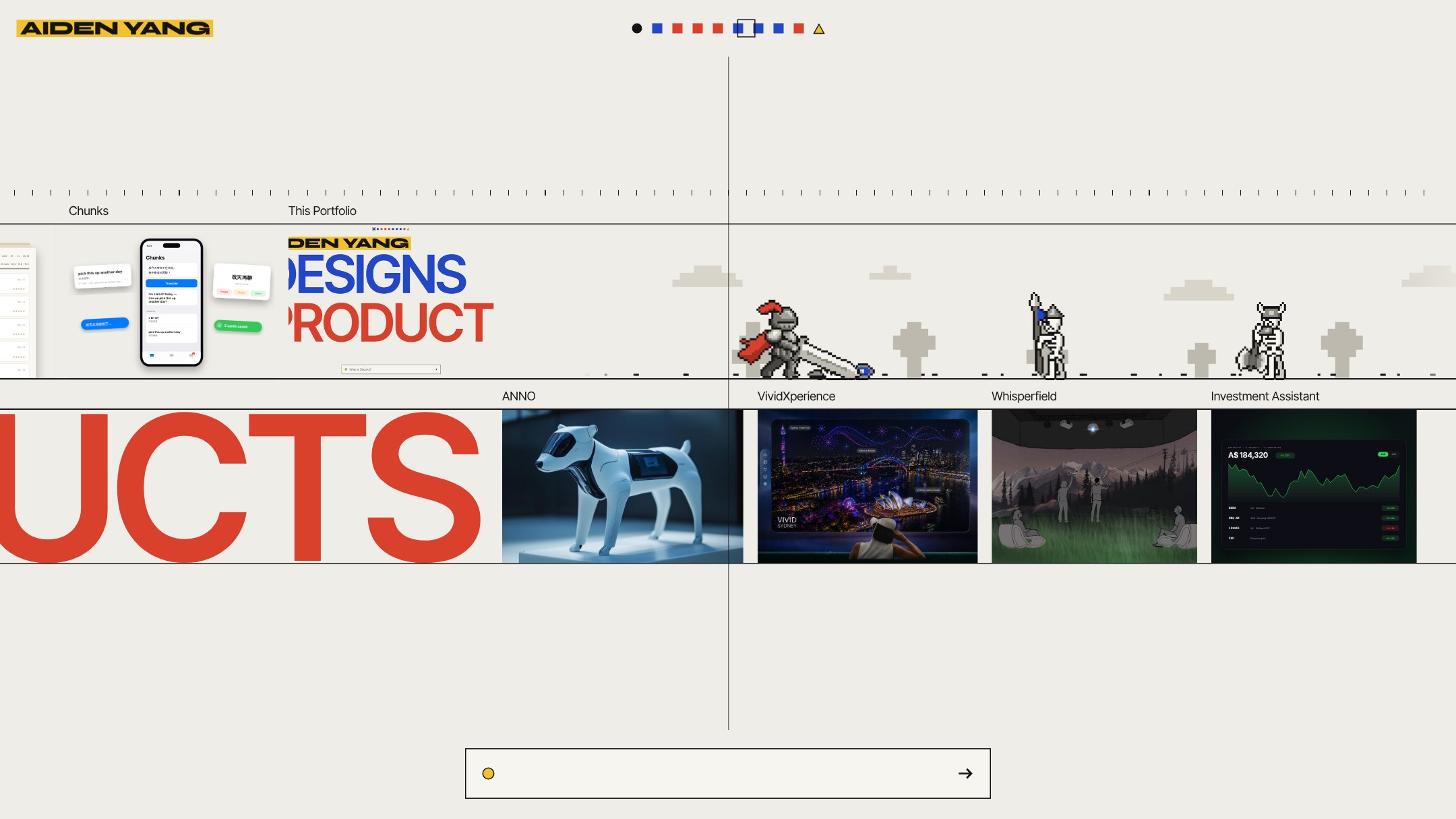
The playhead pushes a knight.
After the fourth project the upper track is empty. I put a small game in that gap. The playhead shoves a pixel knight to the right; three skeletons stand in his way.
He has eight frames: one idle, four running, three attacking. Which frame shows depends only on how far he has been pushed, a new running frame every 22 pixels, so he runs backwards when you scroll back. Each skeleton reads its distance to the knight: it notices him, then tips over through 88 degrees, then becomes a pile of bones.
The sprites were not drawn by hand. A small Python rig builds each pose from joints, with limbs as tapered tubes and a one-pixel outline per part, then exports every frame as SVG rectangles. They stay sharp at any zoom, and their accents are the site’s own blue, red and yellow.

The Name
The name is drawn, then filled.
The name is set in Syne 800, picked from a sheet of candidates. It is not live text. The letter outlines were pulled out of the font file as nine paths, and each path knows its own length, so a dash offset can draw it from nothing. The letters start one after another, then fill with ink.
As the camera zooms out, the same nine paths shrink to 26% and dock in the top-left corner as the site logo.
Process
I directed. Claude built.
The reference was rauno.me. I wanted its logic, motion tied to scroll, not its look. I described the timeline idea, then judged mock after mock and sent most of them back: a red name sitting on a red word looked unbalanced, the first knight did not read as a knight, three identical skeletons looked too uniform. Claude wrote the code and the sprite rig; the decisions were mine.
The result is plain HTML, CSS and JavaScript on GitHub Pages. No framework, no build step. The chat bar at the bottom is the same AI Aiden as before, served by a Cloudflare Worker, and when its answer names a project, the timeline travels there.